A Manor, a Marriage and a Name: How Chenies Stopped Being Isenhampstead
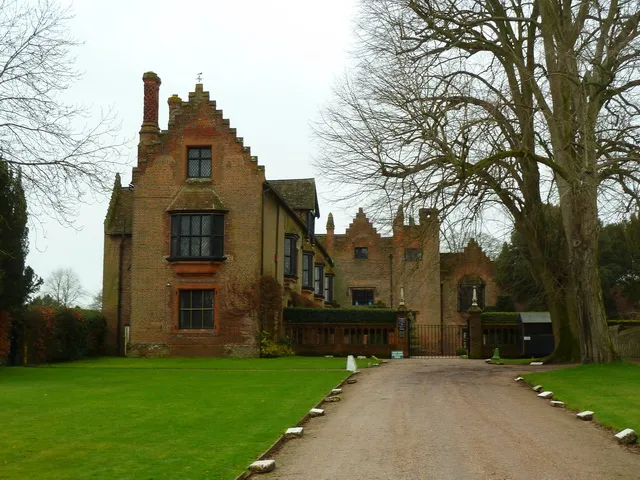
Photo: Alexander P Kapp, CC BY-SA 2.0, via Wikimedia Commons
Village names are strange things. Most of us absorb them without a second thought, treating the words on the green as fixed and permanent, as if they'd been bolted to the gateposts since the Norman Conquest. Then you come across an old map, or a line in a parish register, and realise the sign has been quietly rewritten more than once.
Chenies is a good example. Everybody locally knows the name, and plenty of visitors do too — it's the one attached to the manor house, the church on the slope, and that lovely stretch of the Chess valley where the footpaths never seem busy. What's less well known is that the village spent its first few centuries being called something else entirely.
Two names, one parish
The older name was Isenhampstead. You'll see it spelled a dozen ways in old documents — Isenhamsted, Isenhamstede, Isenhampstead Cheyne — because spelling only became standardised fairly late in the day, and clerks wrote what they heard. The ending is the give-away: hamstede is Old English for a homestead or farmstead, the same element that survives in place names all over the Chilterns. The first part is a personal name, which makes the original meaning something close to 'Isen's homestead'.
It is a wonderfully ordinary sort of name. No grand claims, no battle, no saint — just a farmstead belonging to somebody whose full story is lost. Most English villages started life that way.
The family who moved in
The change came about through the Cheyne family, who acquired the manor of Isenhampstead in the medieval period and, over the generations, became thoroughly woven into the place. They built, they married, they worshipped at the church on the hill, and they presumably did all the usual things a landowning family did in a Buckinghamshire parish — collecting rents, settling disputes, and being mentioned in everyone else's wills.
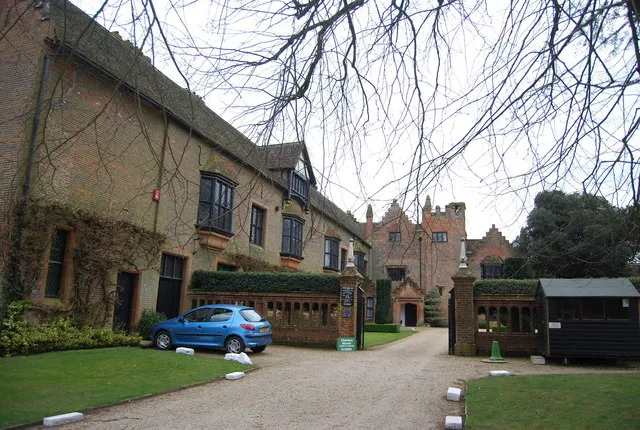
The manor house you can see today began to take shape in the fifteenth century under the Cheynes, and although it has been altered and added to since, the bones of the building are theirs. It is one of the reasons the house feels more like a well-mannered family home than a fortress: it was never really meant to be a fortress.
And here's the thing about medieval naming habits. When one family held a manor for long enough, their surname tended to attach itself to the settlement, the way mud attaches to boots. You get dozens of examples across the country — villages named after Norman lords, Anglo-Saxon thegns, and families who arrived with nothing much and stayed for four hundred years.
So the parish became Isenhampstead Cheyne. Two names, worn together like a coat and a scarf.
The slow business of becoming Chenies
What happened next wasn't a decision anybody made. Nobody convened a meeting and voted on it. What happened was that people got tired of saying the long version.
Over the sixteenth and seventeenth centuries, the shorter form crept into everyday use. Parishioners wrote 'Chenies' in registers. Wills referred to property in Chenies. Mapmakers, who were rarely local and often working from secondhand information, followed whichever version they'd been handed. By the time the Ordnance Survey arrived, the argument was long over.
This is how a great many English place names evolved: not through decree, but through laziness. Isenhampstead Cheyne is a mouthful. Chenies is not.
The marriage that outlasted the name
The Cheyne line eventually passed out of direct ownership, and the manor came into the hands of the Russell family through marriage in the sixteenth century — a connection that would prove far more durable than the family name itself. The Russells became the Earls, and later Dukes, of Bedford, and Chenies remained one of their seats for generations.
The most visible legacy sits, quite literally, in the churchyard. The Bedford Chapel at St Michael's is a remarkable survival — a burial place for one of England's great aristocratic families, tucked into a small Buckinghamshire village church. If you want to understand how a modest manor holding became tied to national history, the chapel is the place to start. The name on the village sign may be medieval, but the monuments inside are on a different scale entirely.
A name as a fossil
There's something rather satisfying about the fact that the old name didn't vanish completely. Place names are like fossils: the original creature is long gone, but the shape of it survives in the rock.
So the next time you're walking past the village green, or waiting for someone outside the church, it's worth remembering that you're standing in a place that has been inhabited, farmed and argued over under at least two names. Isenhampstead is not a footnote — it's the first chapter.
Seek it out
St Michael's Church. The building itself spans centuries, and the Bedford Chapel is the obvious highlight. Look for the Cheyne memorials too — they're the family whose name took over the parish.
Chenies Manor House. The Tudor core of the house dates from the Cheyne era. Check opening times before you travel, as the house and gardens run seasonal hours.
Old maps. The first edition Ordnance Survey sheets, held at Buckinghamshire Archives and in county record offices, show the parish boundary and field names. It's a quiet way to spend an afternoon, and oddly addictive.
The churchyard and the lanes. Some of the oldest surviving inscriptions and boundary markers sit exactly where you'd expect: by the church, at the gates, and along the footpaths that leave the village towards the Chess. Walk slowly, and read what's carved.
The Chess valley path. Field names in the valley still carry faint echoes of medieval farming, and the footpath network is the oldest 'road system' the village has. Take the riverside route and imagine the manor court, the mill, and the tenants walking the same line.
Names change. Paths don't, mostly.