Bottles, Books and Boxes: How Small Deliveries Keep Chenies in Touch
Photo: Jaggery , CC BY-SA 2.0, via Wikimedia Commons
On a damp November morning, Chenies does not make a performance of itself. The green is quiet, the Chess is doing its steady thing under the bridge, and the lanes have that polished, leaf-wet look that makes the Chilterns feel like a well-kept secret. Then a low electric hum arrives from the direction of the main road. It is not a sports car. It is not a tractor. It is the milk float, and for a few minutes the village has a mobile front step.
You do not have to drink milk to notice the pattern. Chenies runs on a quiet timetable of arrivals — bottles, books, boxes, prescriptions, practical help — and each one does more than deliver something. They are the small, repeated contacts that turn a beautiful place into a lived-in one. This is a guide to those lifelines, written for anyone who has just moved in, anyone who is visiting for a week, and anyone who has waved at the same van driver for fifteen years without ever quite knowing when they come.
The early shift: bottles on the step
Milk rounds have changed since the days of horse-drawn floats, but the principle is stubbornly useful. In a village like Chenies, where the lanes are narrow and the nearest supermarket is a drive away, a doorstep delivery is not nostalgia. It is logistics. The float tends to come early, before the commuter traffic and the school run, and it works on a repeat order: pints, eggs, maybe juice, left where you asked them to be left.
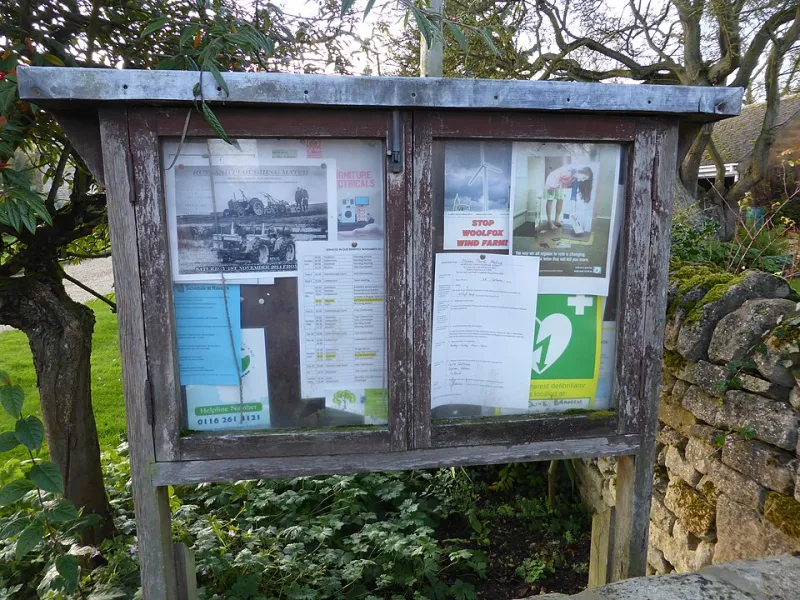
The practical bit is that these rounds are small businesses, not public services. If you want to join, ask a neighbour first — they will know whether the round is taking new customers, which day it runs, and whether the driver prefers cash, card or a monthly bill. The parish noticeboard and the village hall are good places to look for a name. Be realistic about the early start: bottles on a step at 6am are charming in theory and slightly less charming when you are the one who has to bring them in before the sun makes the milk feel unloved.
For visitors, the milk float is a reminder that Chenies is not a museum. If you are staying in a holiday let, do not assume the previous guests' order is still active. Ask the owner. And if you see the float in a narrow section of lane, give it room. The driver has a route to finish and a village to serve.
The van with the shelves: the mobile library
The mobile library is the most quietly impressive arrival of the month. Buckinghamshire has a long history of taking books to rural communities, and the principle still holds: a van arrives, the side opens, and for an hour or so Chenies has a branch library with a view of the green.
Timetables change, so the honest advice is to check before you plan around it. The county council's library pages and the village noticeboard are the reliable sources. Typically the van stops at a set place — the village hall or a convenient spot near the centre — on a set day, often monthly or fortnightly. You can borrow, return, reserve something from the wider catalogue, ask about large print or audiobooks, and generally enjoy the rare pleasure of choosing a book without an algorithm recommending twelve more.
It is also a service that rewards a little courtesy. Do not park in the turning space. Do not treat the open side of the van as a photo opportunity while someone is trying to return three novels and ask about the next Inspector Morse. If you are new to the village, this is one of the easiest places to ask a question and get a straight answer. Libraries are good at that.
Parcels, prescriptions and the practical round
The parcel van is the most visible arrival, and the least romantic. It comes because the internet comes, and in a rural village it does a lot of heavy lifting: birthday presents, printer ink, the odd pair of wellies, the thing you ordered at 11pm and forgot about by Tuesday. The practical challenge is not the delivery itself but the last twenty metres. House names matter more than numbers here. A clear nameplate, a safe place agreed in advance and a note on the gate can save everyone a wasted journey.
Beyond parcels, there is a wider layer of practical help that does not advertise itself. Prescription deliveries, volunteer drivers, a neighbour picking up shopping for someone who cannot get out, the informal network that knows who is away and who might need a hand. Some of this is organised through the parish and village groups; some of it is simply what happens in a place where people recognise each other's cars. If you are new, the village hall and the church are good places to ask what exists. If you are visiting, you will probably only see the vans. That is fine. The point is that they are part of the furniture.
The people behind the wheel
What makes these services work is not the vehicles. It is the repetition. The milk driver who knows which gate sticks. The library assistant who remembers that you like history and not crime. The parcel courier who has learned that the house with the big hedge has a dog that takes his job very seriously. In a small village, that continuity is a form of care. It is also a form of information: a regular driver notices when the curtains have stayed closed, or when the bottles have not been taken in.
That is worth saying plainly. These are not just conveniences for people who cannot be bothered to drive. They are low-key safety nets. They keep older residents independent for longer, they reduce the number of car journeys on narrow lanes, and they give newcomers a way into village life that does not require joining a committee.
A visitor's guide to not getting in the way
Chenies is a quiet corner, and the quickest way to keep it that way is to treat the service vehicles as part of the village rather than an obstacle. Do not park in the space where the mobile library turns. Do not block the lane while you take a photograph of the milk float, however charming it looks. If you are staying locally, ask your host about delivery arrangements rather than guessing. And if you are here for a walk, remember that the people driving these vans are at work. A wave is welcome. A long chat in the middle of a narrow bend is less so.
If you are new here
Start with the noticeboard. Then ask at the village hall. Then ask a neighbour. The information is not secret; it is just local. The milk round, the library stop, the parcel arrangements and the informal help networks all run on word of mouth as much as on websites. In a village like Chenies, that is not a failure of communication. It is the communication.
So next time you hear the hum of the float, or see the library van open its side, or watch a courier trot up a path with a box, do not think of it as background noise. It is the village keeping in touch with itself, one quiet arrival at a time.