Where the Village Meets: A Regular's Guide to Chenies' Favourite Front Room
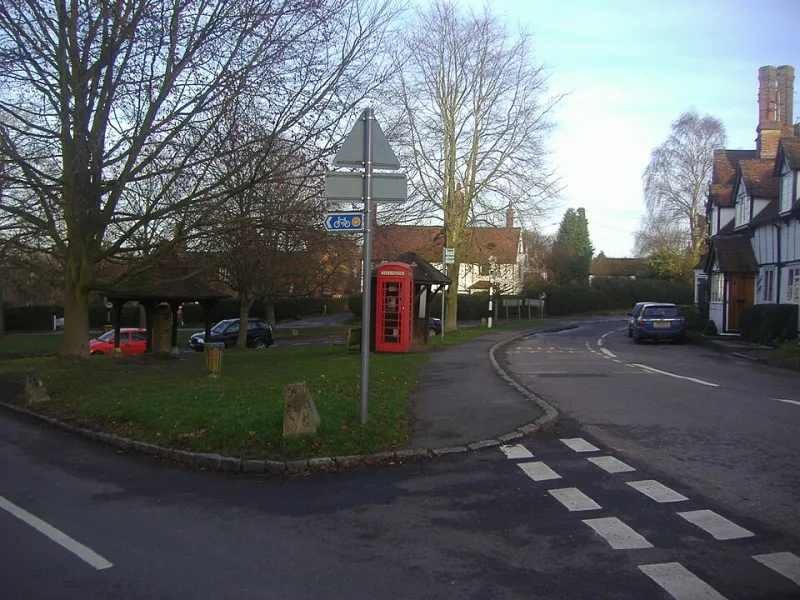
Photo: Windmemories, CC BY-SA 4.0, via Wikimedia Commons
There's a moment, around half past three on a damp Saturday in November, when Chenies seems to hold its breath. The walkers have gone back up the lane, the church is locked, and the light is already thinking about leaving. Then a door swings open, a wedge of warmth comes out, and the village starts talking again.
Every village has one building that carries far more of its social weight than any of the grander ones, and in Chenies that building is the pub. The Bedford Arms takes its name from the family that shaped this place for the best part of four centuries — the Russells, Dukes of Bedford, who held Chenies Manor from the 1520s until the 1950s. You can still read the whole arrangement of the village in the way people use the place today. Not as a monument. As a front room with a bar in the middle of it.
The building that does the quiet work
A village pub performs three jobs at once, and only one of them involves drink.
The first is living room. There are people in Chenies who see more of the inside of the Bedford Arms between November and March than they do of their own best chairs. It's where the paper gets read, where the crossword gets argued over, where someone's boiler breaking down becomes a conversation involving four households and a plumber's mobile number.
The second is noticeboard. Parish council notices, a lost dog, a spare ticket for something in Amersham, the small ads of village life — a great deal of local information circulates by word of mouth at the bar, and a reasonable amount of it is more reliable than the internet.
The third job, and the one visitors benefit from most, is welcome desk. Chenies isn't a village with a visitor centre and it doesn't need one. Ask at the bar where the footpath to the Chess Valley leaves the green, whether the church is open, or which way the wind blows for a decent afternoon walk, and you'll get an answer from someone who has done it a hundred times.
Voices from the bar
"People think we're a pub with a village attached," one of the staff said to me recently, drying a glass and looking out at the green. "Really we're a village with a pub in the middle of it. There's a difference, and you can feel it on a Tuesday in February."
That Tuesday feeling is the honest test of a local. Weekends bring the walkers and the Sunday lunches and the birthday tables, and a good pub handles all of that with good grace. But the midweek quiet is where the village itself lives: the retired couple who come in for a pot of tea at four, the farmer who doesn't stay long, the young family who've worked out that an early tea out is cheaper than a takeaway and considerably more civilised.
One regular, who has lived within a mile of the green for most of his life, put the appeal more simply. He's been coming in for decades, he said, and the wallpaper has changed a great deal more often than the conversation.
The practical bits
A few things worth knowing before you set out.
The pub sits right by the village green, a stone's throw from St Michael's Church and the gates of Chenies Manor, which makes it the obvious full stop to a walk. If you're coming down off the ridge or up from the Chess Valley, it's the natural end point — which is why it's busier on a bright Sunday than on a wet Wednesday.
Food tends to run at lunchtime and again in the evening, with the kitchen busiest at the weekend. If you're arriving late in the afternoon, it's worth checking ahead rather than assuming, particularly out of season. Dogs are a common sight in the bar, but do ask rather than presume — and keep leads short when the place is full.
Parking around the green is limited and shared with people who actually live there, so if you're driving, arrive early or park considerately in the village and walk the last stretch. The same goes for the lanes down to Chenies Bottom — narrow, high-hedged and not designed for a hopeful three-point turn.
When to pull up a chair
Here's the opinionated part, as promised.
Go on a weekday afternoon, between about half two and five. This is the golden window. The lunch crowd has gone, the evening hasn't started, and the pub is at its most relaxed. You'll get a seat, you'll get served quickly, and if you're on your own with a book nobody will think it odd.
Go early on a Friday evening, around six. You'll catch the village before the weekend tables fill, and the atmosphere is at its best — a bit of a buzz, but not yet a crush.
Go for Sunday lunch, but book. This is the busiest the village gets, and turning up hopeful at half twelve on a Sunday is a young person's game.
Avoid the hour after a big walk on a fine bank holiday. Nothing wrong with it, but you'll be queueing behind forty people in walking boots and there are quieter pleasures to be had.
And one rule that applies everywhere: if a table of regulars is mid-conversation, take the seat at the other end. A village pub is generous with its welcome but it isn't a stage, and the quickest way to be treated as a local is to behave like one — order at the bar, say hello, don't colonise the corner where the darts team sits.
The last word
Chenies is a quiet corner of Buckinghamshire, and it's the better for it. But quiet isn't the same as empty, and the difference between the two is very often a lit window and a door that opens. Pull up a chair, mind the dog, and stay for one more than you meant to. That's how everyone else started.