Sloes, Hips and Haws: A Late-Season Forager's Walk Along the Chess
Photo: hawthorn haws rosehips sloe blackthorn berries hedgerow autumn close up, via i.pinimg.com
By the second week of November, most people have written the hedgerows off. The leaves are down, the blackberries look tired, and the whole valley has settled into that grey-brown Buckinghamshire look that photographers love and everyone else forgets. But walk the lanes between Chenies and Chenies Bottom at this time of year with your hands out and you'll find the hedge is still very much in business.
Sloes, hips, haws and the last straggling brambles — this is the tail end of the foraging year, and it's the most interesting fortnight of the lot.
Why a bare hedge is easier to read
There's a practical joy to late-season foraging that summer never quite delivers: with the foliage gone, you can see what you're doing. In August the blackthorn is a green wall with hidden thorns and hidden fruit. By November it's a clean lattice of dark twigs, and every sloe is visible and slightly ridiculous, hanging there like a small dusty grape.
It's also a good time to learn the shape of the valley. The Chess runs shallow and clear through this stretch, and the hedge lines that follow it are some of the oldest boundaries in the parish — the sort of thing that has been cut and laid, cut and laid, for centuries. The fruit you're picking is a by-product of that management, not the point of it.
Four things to settle before you set off
Know where you're allowed. In England you may pick fruit, flowers, foliage and fungi growing wild for your own use under the Wildlife and Countryside Act 1981, but uprooting anything needs the landowner's permission. The important nuance: a public footpath gives you a right to pass, not a right to strip the hedge beside it. Where the path runs across private land, pick from what you can reach comfortably from the line of the path and no further.
Avoid nature reserves and protected sites. Bylaws often ban foraging outright, and they're right to. Check before you fill a bag.
Dress for thorns. Long sleeves, gloves you don't mind ruining, and boots. Blackthorn in particular has a sense of humour.
Bring the right kit. A cloth bag or a shallow basket beats a plastic carrier, which crushes soft fruit and turns blackberries into jam before you get home. A pair of secateurs is useful but never cut more than you need.
Reading the hedge: a quick identification guide
Sloes are the fruit of blackthorn — small, round, blue-black with a faint powdery bloom, growing singly or in twos on famously spiny twigs. Bite one raw and you'll regret it: fierce, astringent, mouth-drying. That's the point. They're for steeping, not snacking.
Rosehips hang from dog rose. Look for oval-to-flask-shaped scarlet hips on arching, hooked-thorned stems. Split one and you'll find a mass of seeds wrapped in fine hairs that will itch for hours — handle them gently and never let children play with the insides.
Haws are the dark red berries of hawthorn, smaller and duller than rosehips with a single stone inside (the native species has one; planted hybrids can have two or three). They're mildly sweet, faintly appleish, and make a surprisingly good ketchup.
Late blackberries will still be out there on sheltered sunny banks. Be picky. After weeks of rain, anything soft and dull-coloured will taste of very little. Pick only firm, dry berries on a dry day and you'll be rewarded.
Leave these alone: spindle, with its startling pink-and-orange capsules; guelder rose, whose translucent red berries look like sweets; bittersweet; and yew, which is deadly. If you don't know it, don't eat it.
The etiquette of a working landscape
A hedge in the Chess Valley isn't a wild resource — it's a working boundary on a working farm, and the birds depend on it far more than you do.
Take no more than a third of what's on any one bush, and never strip a plant bare. Skip the isolated, hard-to-reach clusters, which are often the ones that carry wildlife through the winter. Leave anything you can't comfortably reach. Shut gates, keep to the path, don't push through gaps in the hedge that aren't gaps, and keep dogs out of the undergrowth. Park so a tractor could still get past, because one probably will.
And ask. If you're near a farm gate and someone's working, a quick hello and a nod at your bag costs nothing and is usually met with something between indifference and a decent tip-off about a better bush upstream.
From bag to kitchen
Sloe gin is the obvious one, and rightly so. Prick or freeze the sloes, cover with gin and sugar in roughly equal weights in a big jar, and leave somewhere cool for at least three months — longer if you can bear it. The first frost is the traditional starting gun, but if the weather proves stubborn, a night in the freezer does the same job.
Rosehip syrup is worth the fiddly bits. Simmer the hips, mash, strain through muslin overnight without squeezing (squeezing pushes the hairs through), then reduce the liquid with sugar. Spoon it over porridge or stir it into a hot toddy.
Haw ketchup takes a little patience — simmer haws with a splash of vinegar and a little sugar, then push the pulp through a sieve to leave the stones behind. It's sharp, dark and very good with cheese or cold meat.
A short route to try
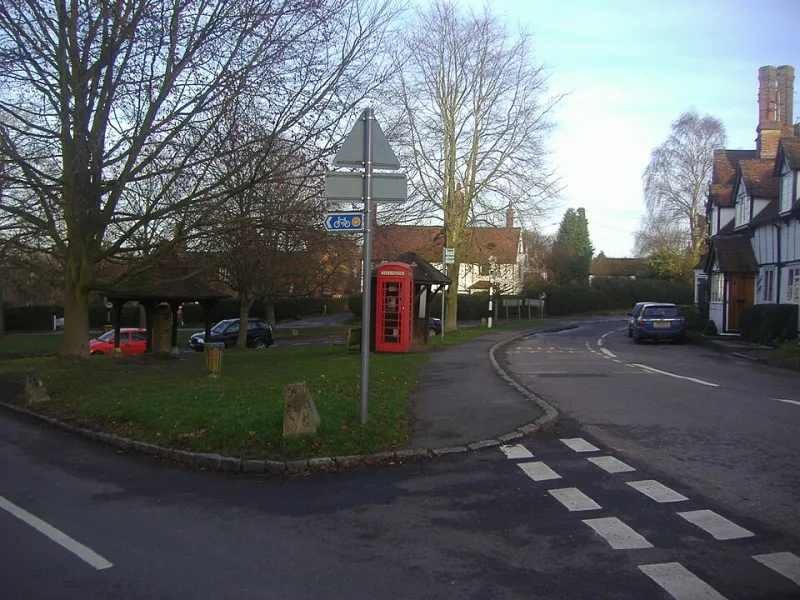
Start on the green at Chenies and drop down the lane towards Chenies Bottom, following the Chess Valley Walk where it shadows the river. The hedges on the valley side of the lane are reliably productive for sloes and hips. Follow the river path east for a mile or so, then climb back up through the fields to the village, where the light goes early in November and the pub, happily, does not.
Give yourself two hours, take a bag, take your time. And leave a few berries for the fieldfares — they arrive any week now, and they've come a long way.