What the Yellow Bin Knows: A Winter Field Guide to Chenies' Lanes
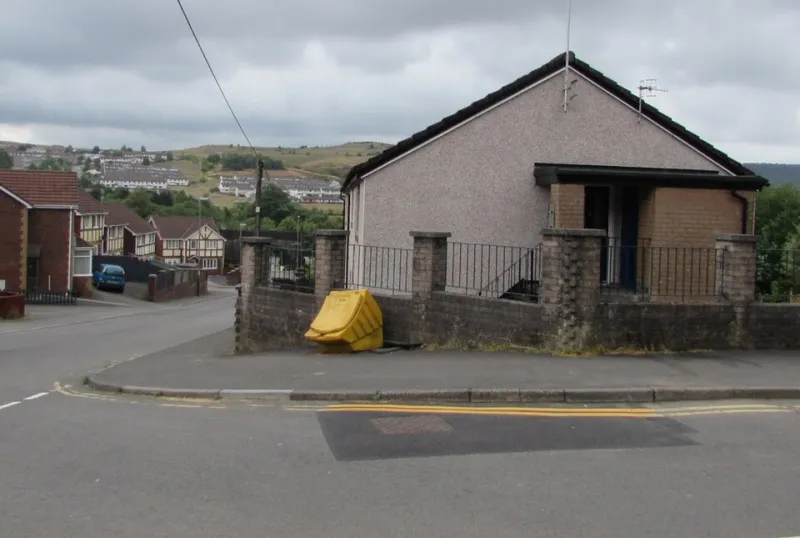
Photo: Jaggery , CC BY-SA 2.0, via Wikimedia Commons
November in Chenies arrives twice. The first time comes with leaves still on the beech and a wind that smells of wet chalk. The second comes overnight, without warning, and you step out to find the bottom of the lane white with frost while the top, up by the green, is dry as a biscuit. That gap — cold air pooling in the valley, warmer air sitting on the ridge — explains a great deal about how this village gets through winter. It also explains the small, unglamorous furniture that keeps it moving: the grit bin, the gully grate, the leaf pile, the handrail nobody remembers being installed.
The yellow box on the verge
You have seen them and long since stopped noticing them: squat bins, usually yellow, occasionally green, parked on verges at the points where a lane steepens or a bend tightens. They are not decoration and they are not a neighbourhood amenity in the way a bench is. They are placed where the highway authority and the parish have agreed that ice forms first and does the most damage — the shaded stretch, the climb out of the valley, the corner where water runs across rather than along.
Two things are worth knowing. First, the contents are meant for the public road, not for private drives, and the surest way to leave a steep bit unsalted in February is for everyone to fill a bucket for their own forecourt in December. Second, an empty bin is not a permanent condition. Buckinghamshire's highways teams refill on a rota, and a report from a resident about a bin that is empty, split or missing its lid tends to move things along faster than a shrug. If you walk these lanes regularly, you are the sensor.
The grate that saves the lane
Halfway down any of the lanes dropping towards the Chess you will find a rectangle of iron set into the kerb line. Gully grates are the least romantic infrastructure in Buckinghamshire and the most consequential. In late November they swallow leaves, twigs, gravel washed off the verge and the occasional crisp packet, and then they stop swallowing. Water that cannot get in goes sideways, across the carriageway, and sits there.
That is the sequence to watch for. A dark wet streak across the lane on a dry afternoon. A fan of leaves fanned out downhill from the grate. A patch that stays damp for days after rain. Those are the spots that turn to sheet ice on the first clear cold night, and they are almost always in the shade of a hedge or a wall, where the sun never quite gets to work.
There is a modest public service available to anyone with a rake and twenty minutes: clearing the top of a blocked grate of leaves and debris so the water can escape. Do it from the verge, not the road, and leave the heavy lifting to the council if the chamber itself is silted up. Report it, and move on.
Reading the ground underfoot
Frost is not evenly distributed, and winter walking in Chenies is largely a matter of learning its preferences.
- The shiny strip down the middle. Tyres polish tarmac to a sheen, and sheen freezes first. If the centre of the lane looks slick on a cold morning, treat it as ice even if the edges are merely wet.
- The bottom of the hill. Cold air drains downhill and settles overnight. The Chess valley can be three or four degrees colder than the green at dawn, and the mist sitting along the river is a useful warning sign rather than a pretty one.
- North-facing banks. Where a hedge runs along the north side of the lane, the ground behind it may not see direct sun for weeks in midwinter.
- The grass verge. Looks grippier than it is. Wet verge over clay is worse than tarmac; in January it is best treated as a last resort rather than a footpath.
- Leaf piles. A drift of leaves at the edge of the road looks solid and forgiving. Underneath, it is usually wet tarmac and a frozen puddle.
A short pre-walk check
Nothing on this list is novel, and that is rather the point of it. Boots with actual tread rather than a fashion sole. A stick if you are unsteady, because the flat bits are not the problem. A torch in a pocket even at three in the afternoon in December. Gloves, so that closing a cold metal gate does not become an ordeal. A phone with a bit of charge, though signal in the valley is patchy enough that you should not rely on it. And a word to somebody about which loop you are taking, which costs nothing and covers the case where the lane is icier than you expected.
The habits that matter more than the kit
Slow down on the bends, whether you are walking or driving. Assume that the patch in the shade is frozen even when the rest is not. Close what you open. And if you see a bin overflowing, a grate blocked, a broken stile or a handrail working loose, say so — the parish and the council cannot fix what nobody mentions, and the people most likely to notice are the ones out walking in it.
A winter loop, if you want one
Start at the green while the light is still low, head towards the church and the manor, then take the path down towards the Chess and the water meadows. Coming back up is the bit that needs care: the climb out of the valley holds the frost longest and loses it last, and the leaf litter on the lower path stays wet for days. Go mid-morning rather than at dawn, when the sun has had a chance to soften the surface, and you will have the place more or less to yourself.
None of this is the sort of thing that ends up on a postcard. But the reason a winter walk in Chenies feels calmer than it has any right to is that somebody, years ago, decided where the bins should go, and somebody else still clears the grate. Appreciating a village is often just noticing the maintenance.