When the Chess Gets Its Voice Back: Reading a Full River Carefully
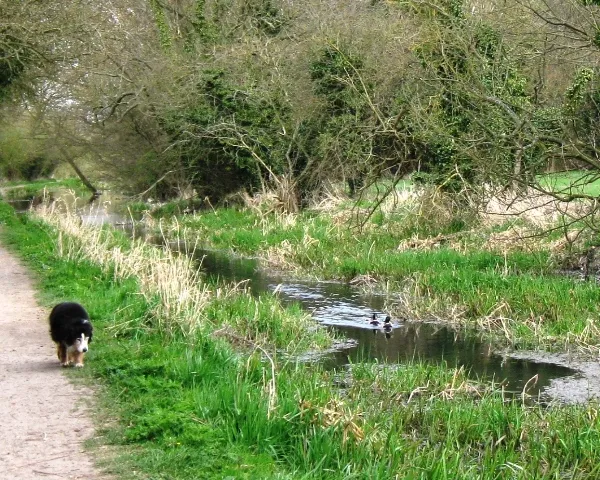
Photo: Chris Reynolds, CC BY-SA 2.0, via Wikimedia Commons
The Chess is a modest river for most of the year. In a dry August you can step across it in places without getting your boots properly wet, and it moves with the unhurried clarity that chalk streams are famous for. Then November arrives, the ground saturates, and the same river fills its channel, finds the old leats, and makes a noise you can hear from the lane above.
That transformation is worth watching. It is also worth watching from the right places.
What rain actually does to a chalk stream
Chalk streams behave differently from ordinary rivers, and the difference is worth understanding before you go anywhere near a high one. Most of their flow comes from groundwater rather than direct run-off, which is why they stay cool and clear in summer and why they respond to rainfall slowly, with a lag of weeks or months rather than hours.
So there are two things happening after a wet spell. The first is immediate: heavy rain on saturated ground sends a fast, muddy pulse down the channel, scouring gravel and carrying silt. That spate is short-lived and often surprisingly brown. The second is slower and more fundamental: rainfall percolating down to the aquifer raises the water table, and weeks later the river rises properly, running clear and full from the springs that feed it.
A river full of clear water in January is the aquifer reporting in. A river full of brown water in the middle of a downpour is surface run-off passing through. Both are worth seeing, and they mean very different things.
Reading the bridges
Start at a bridge, because a bridge is a measuring instrument if you know how to look at it.
Look at the stain line on the stonework, and the paler band below it. That pale band is the normal working range of the river. Anything above the stain is a recent event.
Look at the arch itself. When the water is high, the arch stops being an opening and becomes a throttle; the level upstream backs up, the flow downstream is fast, and the water surface below the arch is glassy and smooth in a way that should make you keep your distance. A smooth, bulging tongue of water below a bridge means a lot of energy is being released.
Look for debris caught on the cutwater and the railings: grass, twigs, the occasional plastic bottle, all combed flat and pointing downstream. That tells you how high the last peak was and how fast it went.
Leats, hatches and old channels
The Chess has spent centuries being managed. Mills, watercress beds and hatches have left a legacy of side channels, leats and weirs, many of them dry for most of the year. High water brings them back to life.
This is one of the quiet pleasures of a wet walk: noticing a channel you have walked past a dozen times in summer, dry and full of leaves, suddenly running. Follow it with your eyes rather than your feet. When a hatch is lifting or a weir is spilling, the water below it is fast, deep and cold, and the bank beside it is usually undermined.
Water meadows and flood marks
The flat pasture beside the river is not accidental. These meadows have historically been allowed to flood, and the grass, the hedgerows and the soil are all adapted to it. After a high river you can read the event in the meadow itself: grass laid flat in one direction, a tide line of silt and seed heads, a ribbon of dead leaves caught in the hedge at exactly the height the water reached.
Look, too, at walls and the lower courses of bridges for older flood marks — small plaques, painted lines, or simply a change in the lichen. Villages along chalk streams have always kept a wary eye on the water, and the marks are a form of memory.
A short, safe high-water route
When the river is up, keep to the higher ground and the made surfaces. A sensible hour goes like this: from Chenies, take the lane down towards the valley, cross at the bridge, and follow the higher path on the side away from the water meadows, staying on anything surfaced or well-drained. Head towards Latimer, look at the bridge from the road side, and return the same way rather than looping through low pasture.
Wear boots with grip, take a stick if you use one, and go in daylight. Tell somebody where you are going — mobile signal in the valley is patchy at best. And check the level before you leave: the Environment Agency publishes river levels for the Chess, and a glance at the gauge saves a wasted trip or a stupid decision.
Where not to walk when the water is high
This list is short, and it is not negotiable.
- Water meadows and low pasture. They flood first and drain last, and the ground beneath the grass may be hollow.
- The leat path below a weir or hatch. Fast, deep, cold, and often undercut at the edges.
- Fords and stepping stones. They disappear before you think they will, and the stones are slippery.
- Under bridges with low headroom. The bank there is steep and the water is compressed and quick.
- Any path that is underwater. If you cannot see the surface you are walking on, the walk is over. Turn around; the river will still be there next week.
Dog owners should keep animals close and out of fast water — a current that looks gentle at the edge is a different river in the middle — and anyone walking near livestock in wet conditions should give cattle a wide berth, particularly where calves are present.
The river as a calendar
The Chess is at its least impressive in a hot September and at its most alive after a wet winter. That is not a flaw in the design; it is the design. The old mills, the leats, the meadows and the flood marks all exist because the river has always done this, and the village has always been shaped by it.
Go and look this winter, from the bank, with the water high and loud and doing exactly what it has done for centuries. Just stand back far enough to enjoy it.